
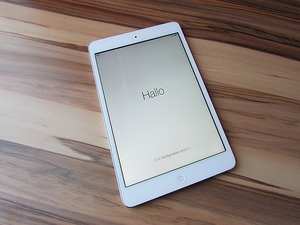
 It’s no secret to anyone who follows the industry. After several astonishing years of back-to-back, record-breaking sales, the market has stagnated. It turns out that there are only so many people who want the iPad in its current configuration, and that number has now been reached.
In response, Apple’s Tim Cook made the decision to make a bigger, more robust version with a 12.9 inch display screen that would be geared specifically to the enterprise market. IBM agreed to sell them. It was a bold move and a strong partnership. It opens up the Enterprise market to Apple in a way that the company has never been able to manage on its own. There’s just one problem. 12.9 inch flat-panel touch screens are in short supply, and those supply problems won’t be resolved for six full months.
Implications for Apple and You
In the long run, of course, this isn’t going to be particularly noteworthy for anyone. Yes, it will mean that Apple has a couple of rocky quarters because they were anticipating a nice boost in sales, courtesy of the new product in their lineup. That will be delayed, but it certainly won’t be a crippling blow.
For the companies waiting eagerly to buy the new, larger iPod, it will mean a slight delay too, but again, nothing critical. It may cost the company a few sales at the margins, where people had delayed investing in new equipment hoping to trade up to an iPad, but are unwilling to wait an extra six months for the pleasure, but again, these are adjustments at the margin, and not something that will radically change the equation or redraw the map.
There’s no indication so far that the delay has upset IBM, their business partner, or has caused them to rethink their commitment to the platform. There’s no real reason why it should. The iPad is a blockbuster hit, and now, a well-known piece of technology. Even if there was another contender waiting in the wings to take Apple’s place, the delay isn’t long enough to make that a reality, or even a serious likelihood.
A Self-Inflicted Wound
In some respects, Apple did it to themselves. They were quite slow to embrace the idea of a larger touch screen, enabling competing devices to claim the top spot where that’s concerned. Again, as mentioned above, this doesn’t put them in any immediate danger of losing the lucrative arrangement with IBM, but it does mean that at least four of their competitors have been able to lock in contracts for those larger touch screens which is exacerbating the supply problems that Apple is currently feeling. There’s actually a fairly limited supply of the core components that make up handheld devices, and all manufacturers buy from the same limited pool of sources. As demand for those components increase, the supply is slowly ramping up, so Apple’s problems will be relatively short lived, but they will have to deal with a couple of uncomfortable quarters before you can get your hands on one of their bigger, enterprise-level iPads.

